A Triennial artist’s first word and lifelong fascination: Water
Originally published May 23, 2025 in the Boston Globe
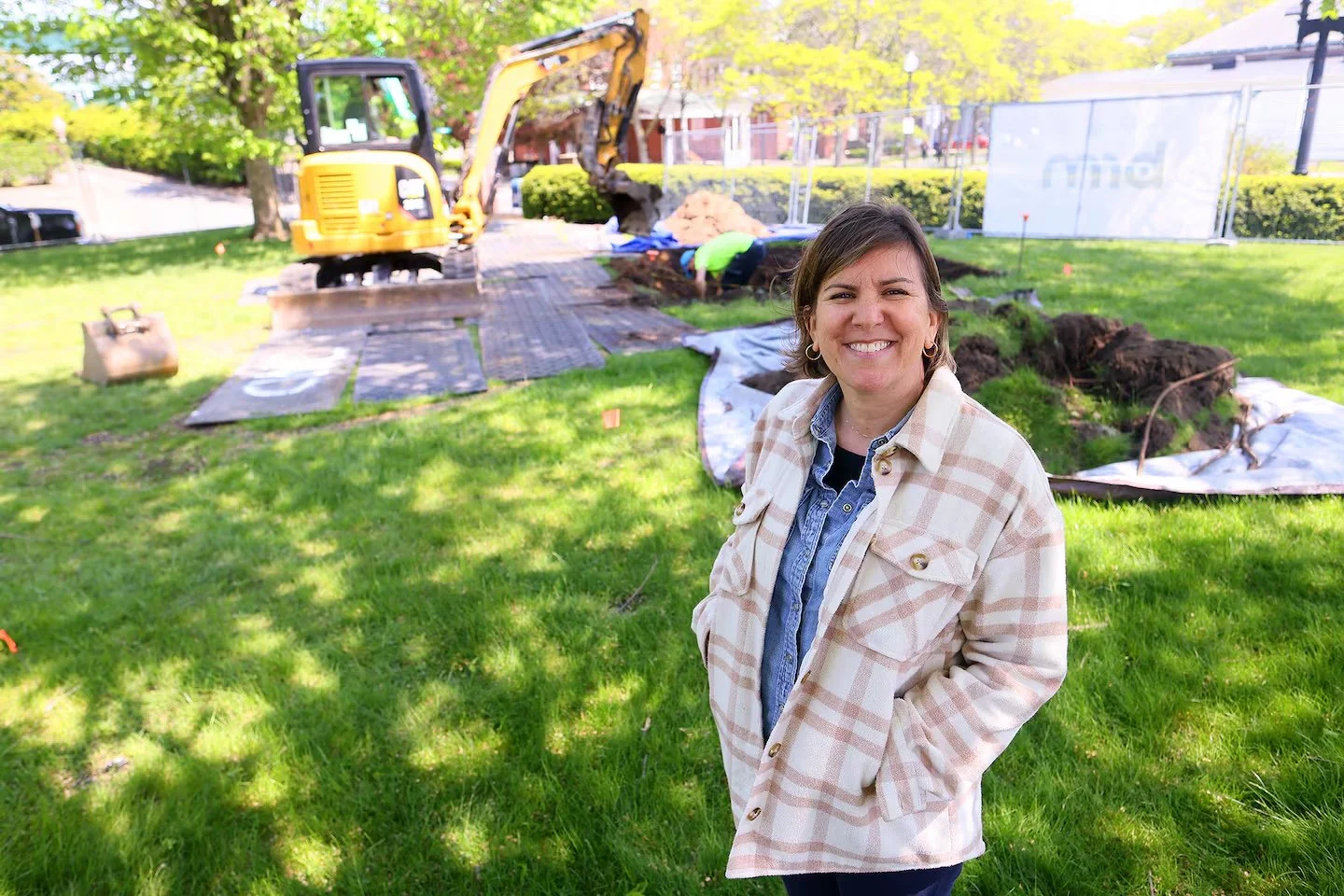
Evelyn Rydz does not know where her fascination with water came from, but it traces all the way back to the day she started speaking.
“Agua was my first word, not mom or dad,” said Rydz, raised in Miami by Spanish-speaking parents. “ I’ve always been drawn to water.”
As a multimedia artist now living in Arlington, Rydz has embraced her natural interests, creating work connected to aquatic ecosystems, human consumption, and the meeting of natural and unnatural elements. Her work has been shown at institutions including the Museum of Fine Arts, Institute of Contemporary Art, and the Harvard Radcliffe Institute. As one of the accelerator artists at the Boston Public Art Triennial which opened Thursday, she is ready to bring her work to larger audiences and get people thinking about the treatment of local rivers.
“My practice has been connected to studying, documenting, learning from bodies of water,” she said. “ I love thinking about our daily relationships to water from everyday use to our dependence, our reliance, and also the human impacts and threats that face water bodies today.”
Her Triennial installation, “Convergence: Porous Futures” at the Charlestown Navy Yard, is literally dug into the ground, featuring winding, shallow trenches cut into a grassy area to depict the paths of the Charles and Mystic rivers as they course through the city and converge at Boston Harbor.
The trenches are bioswales, she says, low-lying areas that capture rainwater and allow it to seep back into the ground, where it is naturally filtered. The installation is meant to ask audiences to consider the damaging effects of stormwater runoff in cities made of asphalt and concrete, which forces water to run along the surface, accumulating pollution as it washes into rivers like the Charles and Mystic.
”Every time it rains, I’m imagining how the water is moving,” she said, adding that climate change will only exacerbate the problem. “We’re expected to get more and more increased weather events, more and more heavy rainfall.”
At the point where her “rivers” converge at the harbor, Rydz has set a circular rain garden of native plants and a sculpture of mirrored steel representing the negative space of a storm drain. The sculpture is constructed of 44 angled pieces of mirror that emerge from the garden tilted toward the sky, evoking the elusive, everflowing nature of water.
“The shape of water is impossible to define. It’s moving and changing, and it can slip through our fingers,” she said.
Rydz is also creating “field guides” to hand out, featuring original photography, artwork, and interviews with environmental experts and people in her personal life who share a deep connection to water and the health of its ecosystems. She said these conversations rounded out her knowledge of the environmental issues surrounding the lack of porous surfaces.
“ I learned so much through this project,” she said. “One of the things I love about delving into any new project is that I become a student.”
The location of “Convergence” in Charlestown is crucial to the understanding of the work, being the point of intersection between the Charles and Mystic Rivers, she said.
When first conceptualizing the project, Rydz was struck by how the Charles’ overall water quality grades were much higher than that of the Mystic — the lack of pervious surfaces around the latter a key reason why. Still, she said, the two rivers are tied together, showing that the issue is one affecting more people and ecosystems than it may first appear.
“ If water bodies are thought of as individual, we may think about cleaning up one water body or protecting one water body without thinking about their connection,” she said. “What’s done in one will impact another.”
“Convergence,” to Rydz, is not just an installation meant to quietly raise awareness, it’s a proposal to start thinking about developing land differently, and a plea for keeping ecological issues at the forefront of those conversations.
“ It would be beautiful to see every time there is a building developed, it becomes a natural thought to design in a green space as part of built environments,” she said, “not as decorative, but as an important part of how we think about living together in the city.”