A triumphant return for the two Johns of They Might Be Giants
Originally published Dec. 12, 2024 in the Boston Globe
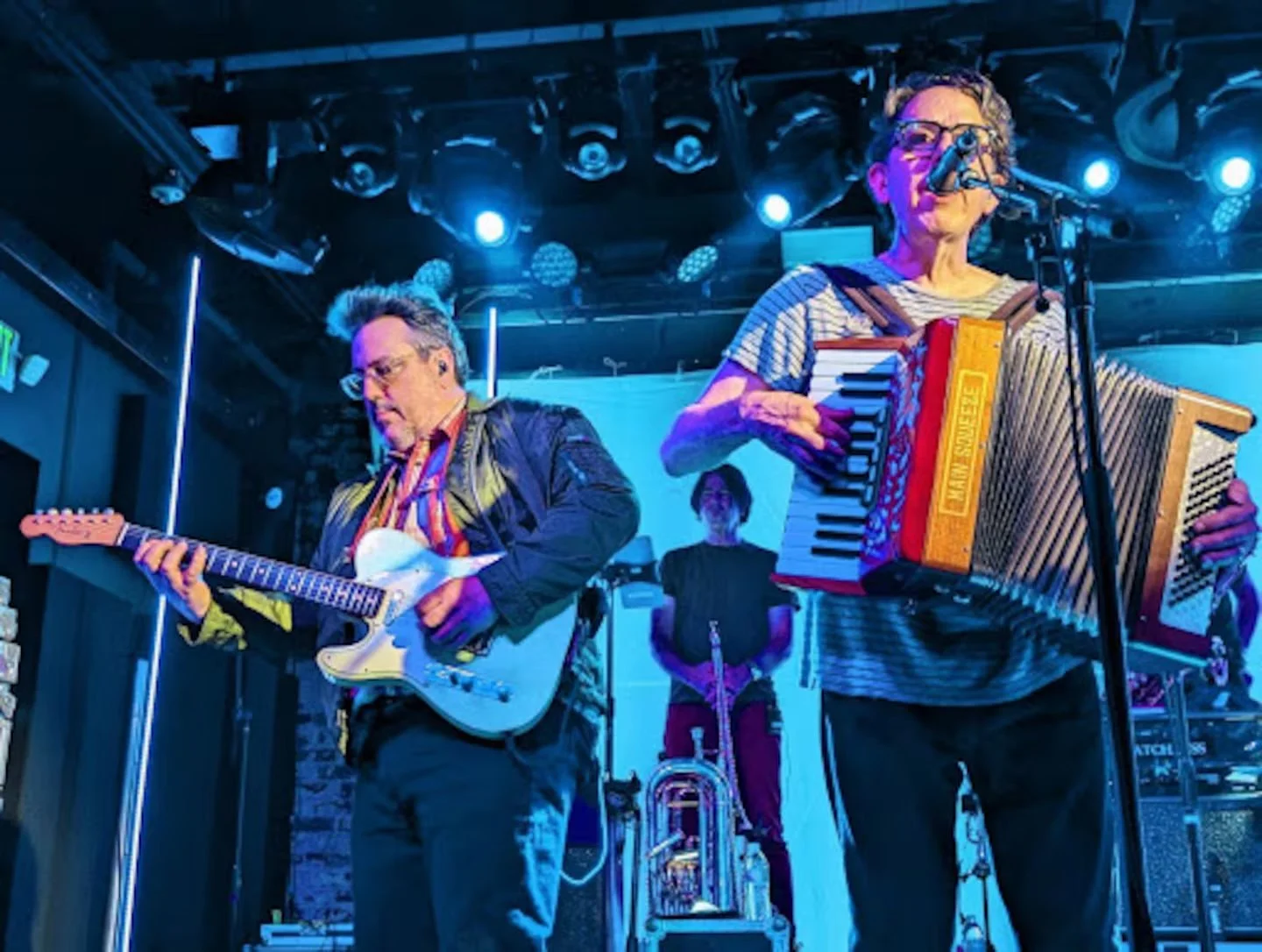
John Flansburgh still remembers being in high school and seeing shows at the Orpheum Theatre. This weekend, he’ll be taking the stage there.
Maybe reading that They Might Be Giants will be playing two shows at the Orpheum isn’t exactly earth-shattering. The two Johns that make up the band, Flansburgh and Linnell, have kept alternative music audiences entertained for decades — whether you know them from popular tracks like “Birdhouse in Your Soul” or their soundtrack and theme music work — and are now comfortably situated in the legacy act space. Still, the excitement in Flansburgh’s voice was palpable when he discussed the prospect of returning to the storied venue. It’s an excitement that hasn’t died, and could help explain why the duo has continued to thrive.
“We’ve been together for 40 years. That’s wrong,” Flansburgh joked. “Bands aren’t supposed to be together for 40 years, especially without breaking up or going into rehab or murdering one another.”
Not only have They Might Be Giants remained together, it feels like they’ve never taken their foot off the gas. Even into the 2020s, as the band has weathered the pandemic and a scary car accident in 2022, when Flansburgh was hospitalized with several broken ribs, they’ve maintained a consistent road presence. When we spoke, Flansburgh had recently returned from a string of shows in Australia, and was calling from a Walgreens parking lot where he had just finished shopping for toiletries for the next stage of touring (“You get really good at packing your suitcase,” he said, of being on tour this much.)
Their work ethic has proven tough to break, and though it may seem physically and mentally grueling for Flansburgh and Linnell, 64 and 65 respectively, this schedule is what keeps them energized.
“It’s what we do,” Flansburgh said. “It’s so much fun to play for people, and it’s extremely flattering when you realize that you’re kind of a part of people’s lives.”
Their inventiveness and ability to keep fans guessing is another reason crowds keep turning out year after year; a recent run of shows honoring their 1990 album “Flood,” for instance, saw them playing track “Sapphire Bullets of Pure Love” backward, vocals included. This time around, the band will be touring with an eight-piece lineup, and one of the two Boston shows (intentionally kept a secret) will double as a mini-celebration of their 1994 album “John Henry,” heavily featuring tracks from the band’s fifth album.
“We’re better performers now than when we started, and I think we just want to show our improvement,” Flansburgh said.
He cites the wide audience They Might Be Giants pulls as another reason for their ongoing success. A given crowd can feature people who found them through college radio in the 1980s, toddlers-turned-adults who got hooked from their mid-2000s kids’ projects, and those who discovered the band through their multiple releases since 2010.
“When you’re in a legacy band, you come to understand when you say, ‘And here’s a song off our new album,’ for many people, that’s the cue to run to the bar,” he said, adding that the different demographics of his audiences seem to buck this trend. “People’s relationship to our band really is unique to them.”
Flansburgh’s relationship with his bandmate is also an unusual one in the larger musical landscape. John Linnell is not only someone he’s worked with for the better part of four decades, but someone he grew up with in Lincoln. Despite their many years as a band, maintaining both a professional and personal relationship has been very easy, and even the chore of long road trips between shows doesn’t feel like a hassle.
“The biggest problem is we’ll be listening to the radio and yakking for five hours and then we’ll blow our voices out because we’re talking too much,” he said. “It’s like, ‘Sorry folks, we’ve just been laughing in the car.’”
The trajectory of They Might Be Giants has been ever-shifting, taking the band in myriad sonic directions, but their work has remained steady. The band has been dependably touring and creating new music, and reflecting on that, Flansburgh is immensely grateful.
“I’ve seen so many bands come and go. It shakes me up,” he said. “It seems like we’ve never really had a hard time finding an audience for what we’re doing, and you don’t think about that until people stop coming. We just have been very lucky.”