Live from the Museum of Science: It’s David Byrne … talking about eels
Originally published May 15, 2024 in the Boston Globe
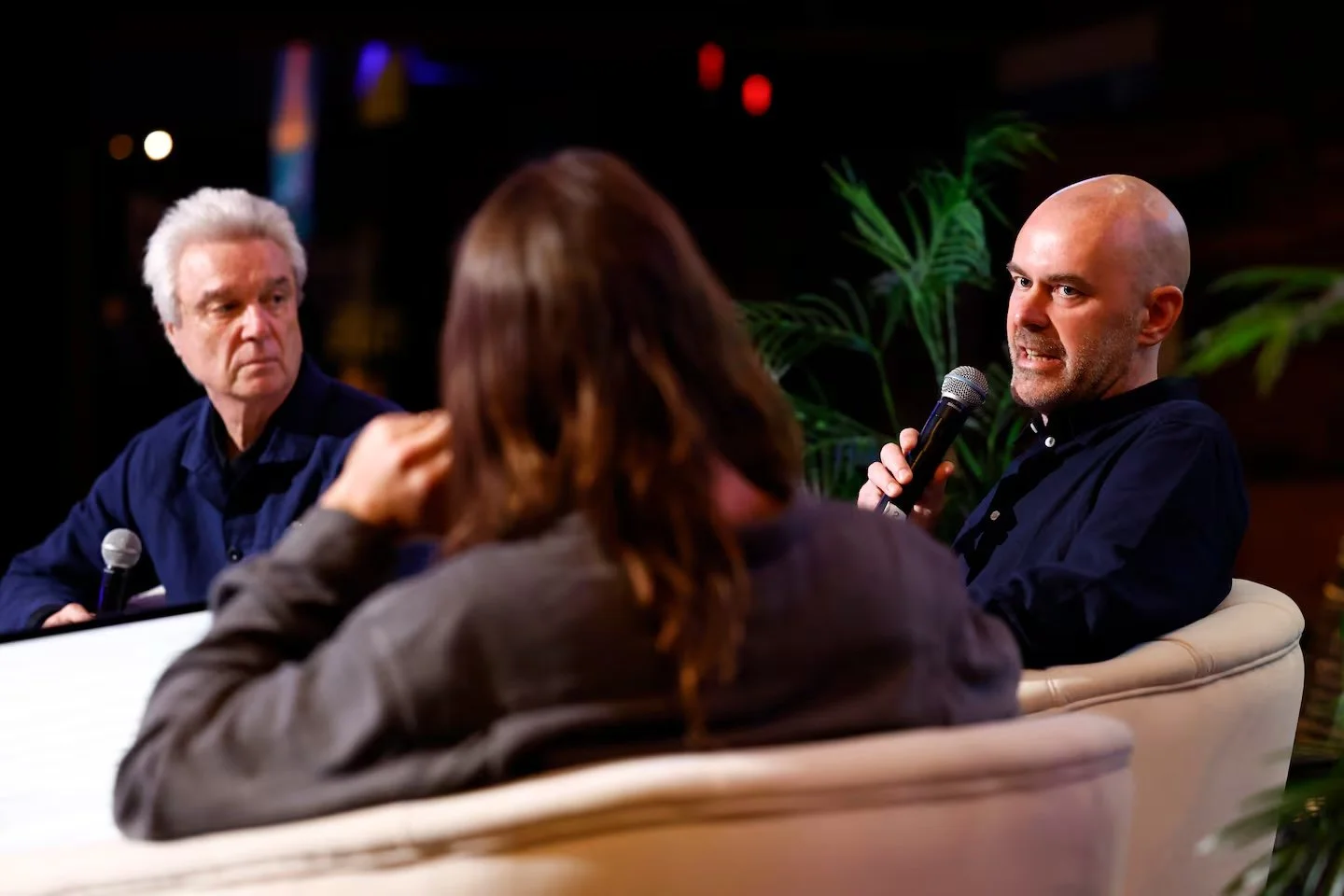
An hour before showtime, the line in front of the Blue Wing entrance at the Museum of Science last Wednesday kept growing, with audience members giddy to see David Byrne live. The catch? He wasn’t there performing any of his music or putting on one of his many theatrical shows.
He was there to talk about eels.
The Talking Heads frontman is no expert on the topic, but he was joined by the Swedish journalist Patrik Svensson, author of “The Book of Eels,” to discuss some of the great mysteries surrounding the slippery fish — such as how they reproduce, why they’re dying off at such a fast rate, and why the European and American eel (as far as humans know) are born in, and eventually return to die in, one specific spot in the Atlantic Ocean. Their conversation would become an episode of the “Sing for Science” podcast, hosted by musician Matt Whyte, who brings musicians and experts together for a scientific discussion catered to the artist’s interests or specific song lyrics.
“I understood that David Byrne is an artist whose career went in the direction his interests led him,” Whyte said in a phone interview with the Globe on Friday. “So for him to be like ‘Sure, I’ll come to Boston and talk about eels’ makes perfect sense to me.”
Episode ideas have come from Whyte’s own reading or people — either artists or fans — coming to him with suggestions. Previous discussions have included Ringo Starr discussing the science behind peace and love with meditation teacher Bob Roth; Jeff Tweedy, whose lyrics on Wilco track “Less Than You Think” touch on consciousness, in conversation with computational psychologistShimon Edelman; and Korn’s Jonathan Davis, who used to work as a mortician, discussing human anatomy with science writer Mary Roach.
In the case of Byrne, Whyte met him at a mutual friend’s birthday party in August and pitched him on a few ideas. Eels won out.
As Byrne described on stage, he had no idea before he read Svensson’s book that eels possessed such mystery compared to other similar creatures. “I thought ‘Oh, it’s a fish. It’s a different shape, but it’s like a fish,’” he said. “It’s not.”
Byrne’s fascination was on full display in the Museum of Science’s auditorium—he had come prepared with notes and questions, and his head bounced between the author and the monitor in front of him, as it displayed eel photos and informational graphics. He excitedly nudged Svensson into explaining why eels continue to confound researchers, becoming particularly animated when Svensson mentioned their lifecycle, which includes two metamorphoses, and a phase where they stop eating altogether.
Svensson was game to discuss any facet of his research, visibly taking the sold-out audience by surprise the more he delved into Byrne’s questions.
Whyte was able to sit back and let the two converse, one of his goals as host of the show.
“It’s a great success if I just become wallpaper up here,” said Whyte on Friday. “I think my role is to make sure we touch on certain points, but let’s be honest, it’s going to make for a much more engaging interview if it’s David up there asking the questions or interacting with the scientists.”
Though each episode is centered around a specific concept, Whyte encourages free-flowing conversation. The conversation on Wednesday veered into everything from dam removals in Maine to Byrne’s 2005 sound installation “Playing The Building,” which traveled to buildings in cities around the world, where visitorscould play a piano with keys rigged up to affect different partsof a building’s infrastructure, like metal pipes or air ducts.
“I think what I’m selling is the interchange of ideas and the fact that a conversation can lead anywhere,” Whyte said.
Through each podcast episode he said he hopes to promote scientific literacy, deliver digestible conversations to new audiences, and push people to be as inquisitive as they can be.
“I believe that the more that we all think like scientists, the sooner we will realize that all of us are more alike than we are different,” he said.