Looming Presence of ICE, Detainment of High School Senior Create Sense of Fear in Port Chester
Originally published Feb. 20, 2026 in the Rye Record
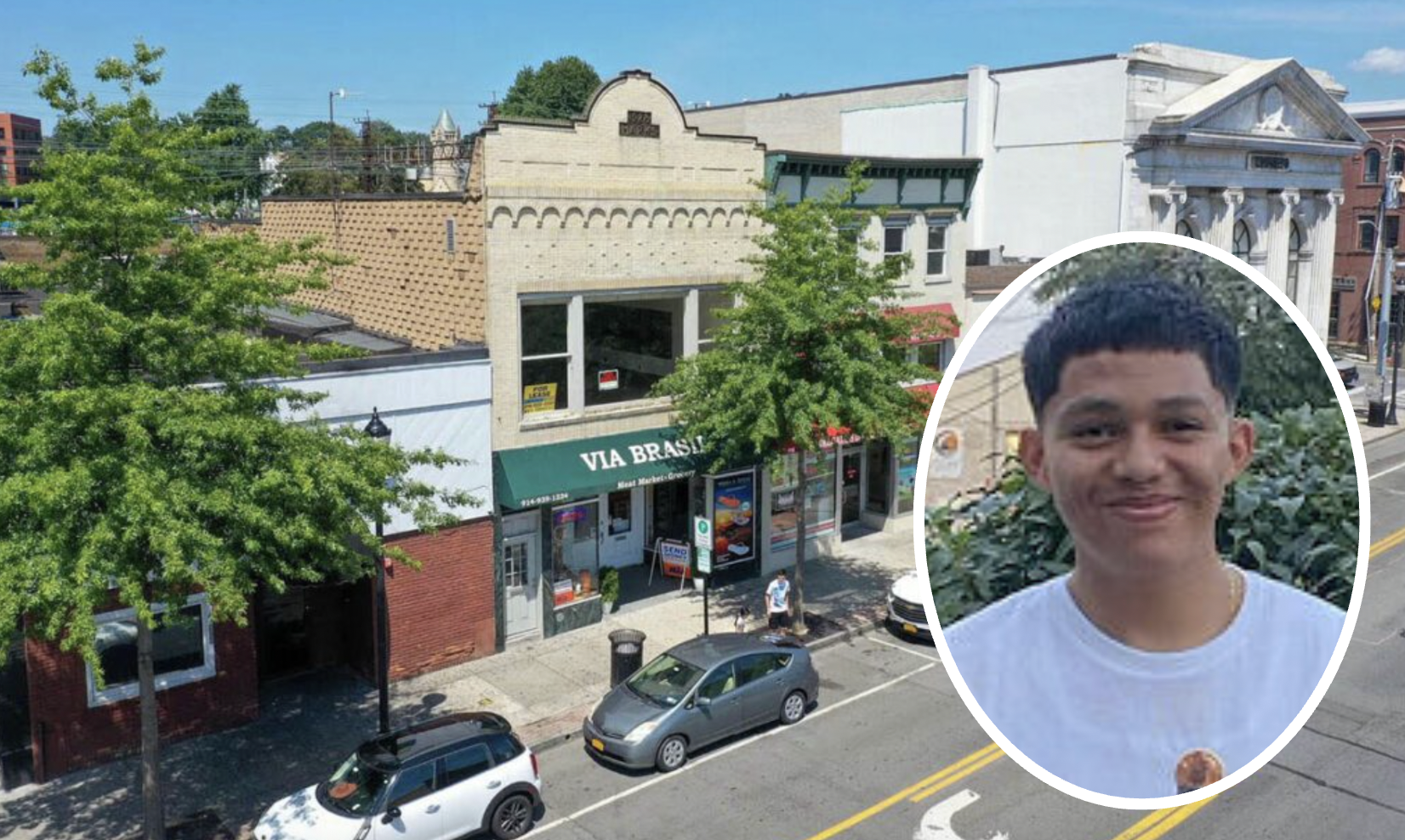
Rafael Antonio Morales’ mother never thought the day would come.
She was thrilled when, in January 2023, her son joined her in Port Chester, where she had lived for the previous 13 years. He enrolled at Port Chester High School and was set to graduate in June 2026. He worked as a busboy at the J House Greenwich, and loved playing soccer and going to school.
But on Oct. 27, he was picked up by Immigration Customs Enforcement at a nearby apartment building, and today he’s sitting in an ICE detention center in Louisiana.
“We never lived in fear,” said his mother, speaking to The Rye Record in Spanish. She asked that her name not be published for fear of retaliation. “We never thought something like this could happen.”
Many immigrants across the U.S., who never thought they would be targeted by deportation officials are coming to grips with the new reality of ICE raids. While Westchester County has not been a hotbed of ICE activity compared to other areas and cities like Minneapolis, smaller communities increasingly are being targeted, Port Chester among them.
The result has been fear and a sense of gloom across Port Chester. Residents are staying indoors and away from school, work, and community organizations.
Morales arrived in New York from El Salvador without documentation, and turned 18 around the time of his detainment. His mother told Lohud.com that after a previous run-in with immigration enforcement, he was given the December appointment date, where he expected to apply for citizenship.
ICE was not looking for Morales on the day he was taken along with about 12 others, his mother said. His deportation case has been pending since.
“ The policy now is just grab everyone and sort it out later,” said Morales’s lawyer, Lee Koch of Koch Law PLLC in Manhattan.
Daniel Bonnet, chief program director at The Carver Center in Port Chester, said the city has changed notably.
“Parents are afraid to send their kids to an after-school program, you have individuals that are even afraid to go to the grocery store because of the fear of the reality of ICE picking you up,” he said. “It is felt in different levels from our children all the way to our adults and seniors.”
Morales’ mother said she feels cautious now, only traveling for work, and when going out is essential. That’s a strain on a single mother raising three other children.
“Here in Port Chester, there are a lot of friends of mine who have their husbands in prison,” she said.
According to ICE’s website, people can be detained and questioned if agents have “reasonable suspicion that the aliens are illegally present in the United States.”
Now, immigrants are laying low, and that creates big problems for their children and their education.
“The education aspect of that is, ‘Ma’am, you need to send your kids to school, because if not, they’re going to call Child Protective Services on you,’” Bonnet said. “You don’t want to put yourself in a vulnerable situation.
“How do we educate our families that may have fear to really understand the circumstances and the policies and rules behind it?”
People need to understand how to avoid jeopardizing themselves even more, he added. But parents are keeping their kids out of the center’s after-school program, afraid of having them detained. They are saying they would rather keep them home than send them to school.
But what behavior is safe? Rapidly changing ICE tactics have flummoxed even immigration lawyers.
“I’m made to feel like less of an expert than I used to feel,” said Sharyn Bertisch, a Rye resident and lawyer who is a partner at Feinbloom Bertisch LLP. “I find the landscape we’re in unprecedented.”
Bertisch and her brother, Jeffrey Feinbloom, have been practicing immigration law together in New York and Westchester for 24 years. Since 2025, she said, “straightforward” cases in securing a stay in the U.S. and avoiding detainment by ICE have become complicated.
“We used to be able to assure people to not hesitate to present themselves for regularly scheduled check-ins,” Bertisch said.
“ Now, we have to take into account that nothing is without risk,” said Feinbloom, adding this also applies to green card and fingerprint appointments, and court hearings.
Westchester County offers some protection to undocumented immigrants. The March 2018 Immigration Protection Act, signed by then-County Executive George Latimer, now the district’s congressman, prohibits the use of any local resources in federal investigations surrounding ethnicity or national origin.
But not all towns in Westchester are bound to cooperate. Koch said each town has its own code of laws relating to the enforcement of federal immigration policies, many of which came into being after the start of Donald Trump’s first term.
In June, County Executive Ken Jenkins rejected the label of “sanctuary county” and emphasized that county agencies can still comply with federal agents.
Feinbloom asked, “If and when ICE comes back, to what extent can local law enforcement be helpful without running afoul of federal law? I think that’s really important and something that citizens should be asking of their local leaders, their police, and stakeholders within their community.”
Many local leaders have raised concerns. Latimer recently compared the agency’s actions to “pogroms and ethnic cleansings” and said he would support measures to impeach U.S. Secretary of Homeland Security Kristi Noem. State Sen. Shelly Mayer has proposed a bill to prevent ICE from entering schools in New York state.
Both participated in an interfaith service Jan. 28 at Congregation Kol Ami in White Plains that drew more than 1,000 people after the shooting of protester Alex Pretti by ICE in Minneapolis.
“I feel really proud that at the drop of a hat, the Westchester Interfaith community came together and showed up together in an ethos of love,” said Rabbi Jason Fenster, of Kol Ami.
But he noted immigrants were not there.
“We heard from some of our communal partners that there were some people who chose not to come because they feared for their own safety,” he said. “Being visibly present at an event like this might put their communities in harm’s way.”
The presence of ICE in Westchester may not be new, but the scope of its operation is. Before, people like Rafael Antonio Morales would not have to fear deportation, Koch said, and he doubted Morales would have been picked up.
The federal government last week announced that its “surge” operation in Minneapolis has ended, but the organization is detaining immigrants all over the country.
And Morales’s mother wonders what happens next.
“The only thing I would like to see is for my son to come back,” she said.